
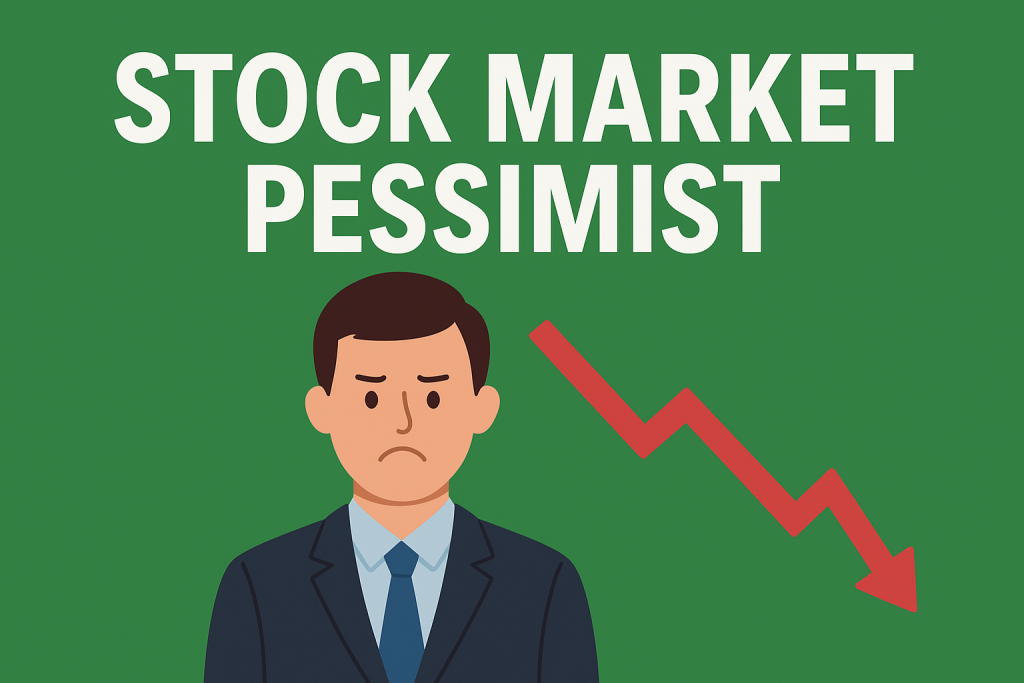
Stock Market Pessimist: Why Some Investors Always Expect a Market Crash
The stock_market is influenced by both numbers and human psychology. When prices rise, investor confidence grows. When markets fall, fear spreads quickly. Among different types of investors, there is a group known as the stock market pessimist — investors who focus more on risk than reward.
These investors often study market cycles, valuations, and economic signals to identify potential weaknesses. While pessimism is sometimes viewed as negativity, experienced market participants understand that cautious thinking helps reduce emotional decision-making.
Learning how pessimistic investors think can help individuals manage risk, avoid panic, and make more balanced investment decisions over the long term.
What Is a Stock Market Pessimist?
To understand market behavior, it is important to first answer a basic question: what is a stock market pessimist?
A stock market pessimist is an investor who believes that potential market risks often outweigh expected rewards. Instead of assuming steady growth, they prepare for corrections, economic slowdowns, or periods of weak performance.
These investors closely monitor economic indicators such as inflation, interest rates, debt levels, and geopolitical tensions. When warning signs appear, they may reduce exposure to high-risk assets as part of a broader risk management strategy.
Pessimism does not indicate a lack of knowledge. Many pessimistic investors rely on historical market cycles, data analysis, and real-world experience to make cautious and informed decisions rather than following short-term hype. Understanding charts and graphs can help both pessimists and optimists make informed decisions.
What Do You Call a Stock Market Pessimist?
Many people ask what do you call a stock market pessimist in everyday investing language.
The most widely used term is a bear. A bearish investor believes that market prices may decline or that economic growth could slow. During uncertain periods, bears often focus on capital preservation by holding more cash or investing in defensive sectors that historically perform better during downturns. A bear market refers to a period of prolonged price declines, where investors expect downward trends and act cautiously.
Other commonly used terms include cautious investors, risk-averse traders, and defensive investors. While these labels vary, they all describe a similar mindset — prioritizing risk control and long-term stability over aggressive return-seeking.
Why Stock Market Pessimists Expect Crashes
Pessimistic investors often develop their views through a combination of market history, data analysis, and personal experience. Pessimists often ask, ‘Will the stock market crash this year?’ to prepare for potential downturns. Several well-known factors explain why they believe markets are vulnerable to sharp declines.
1. Market History Repeats Itself
Financial markets move in cycles of expansion and contraction. Every long bull market has eventually been followed by a correction or downturn, leading pessimists to view unchecked optimism as risky.
2. Overvaluation Concerns
When stock prices rise much faster than company earnings, pessimistic investors worry that valuations become stretched. They see this gap as a warning sign that expectations may be unrealistic and unsustainable.
3. Economic Warning Signals
Rising interest rates, slowing economic growth, high debt levels, and weak consumer spending are common indicators that concern pessimistic investors. These signals often suggest tighter financial conditions ahead.
4. Emotional Market Behavior
Markets are influenced by human psychology as much as fundamentals. Excessive optimism can lead to speculative bubbles, while fear can accelerate sell-offs. Pessimists pay close attention to these emotional extremes.
This cautious mindset is often shaped by experience. Investors who have lived through major market downturns tend to place greater emphasis on risk awareness and capital protection.
Stock Market Pessimists vs Optimists
Financial markets function because investors hold different opinions about risk and opportunity. Optimists often push prices higher, while pessimists introduce caution by questioning valuations and sustainability.
Optimistic investors believe innovation, economic growth, and long-term trends will continue to support higher market prices. They are generally more comfortable taking risks and holding investments through periods of volatility.
In contrast, stock market pessimists focus on downside protection. They prioritize stability, diversification, and structured risk management. As a result, they may exit positions earlier or avoid highly speculative assets during uncertain conditions. Pessimists often consider account size and risk allocation before entering trades.
Neither perspective is always correct. Healthy markets rely on both optimism and pessimism to remain balanced, liquid, and efficient over time.
Stock Market Pessimist in Media and News
Financial media plays an important role in shaping investor sentiment and public understanding of market risks. Newspapers, market analysts, and financial commentators often present pessimistic viewpoints to provide balance alongside optimistic narratives.
Major publications frequently quote analysts who raise concerns about overvaluation, economic slowdowns, or financial instability. This is why phrases such as stock market pessimist nyt are commonly seen in discussions related to financial journalism. This type of coverage is not intended to spread fear, but to encourage critical thinking and informed decision-making among investors.
While media pessimism can sometimes increase short-term anxiety, it also serves as a reminder for investors to consider risks carefully, especially during strong bull markets when optimism is widespread.
Stock Market Pessimist Crossword Explained
The term stock market pessimist has also become common in popular culture, particularly in word puzzles and crosswords.
A stock market pessimist crossword clue usually points to simple and widely recognized terms such as “bear” or “skeptic.” These puzzles are designed to test general financial awareness rather than advanced investment knowledge.
When solving a stock market pessimist crossword clue, familiarity with basic market terminology often makes it easier to identify the correct answer quickly.
The phrase stock_market pessimist nyt crossword appears frequently because financial and economic terms are regularly featured in New York Times puzzles, reflecting how closely market language is tied to everyday discussions.
Are Stock Market Pessimists Always Wrong?
A common myth is that pessimistic investors miss opportunities and stay on the sidelines too long. This is not always true.
Many pessimists correctly identified risks before major market downturns. They warned about excessive leverage, weak fundamentals, or unsustainable growth. While they may not time markets perfectly, their caution often helps preserve capital during volatile periods.
However, constant pessimism can also lead to missed gains. Markets tend to rise over the long term, and avoiding investment completely can reduce wealth-building opportunities.
The key is balance — understanding when pessimism is justified and when it becomes excessive fear.
Can a Stock Market Pessimist Be a Smart Investor?
Yes, and many are.
A stock market pessimist often follows disciplined investment strategies focused on risk management and capital protection. These strategies may include diversification, stop-loss rules, maintaining cash reserves, and investing in companies with strong fundamentals. Such investors value patience and avoid making decisions based on short-term emotions.
Pessimistic investors also apply stress testing to their portfolios by considering scenarios such as sharp market declines. Asking questions like, “What happens if markets fall 20%?” helps them prepare for uncertainty and improve long-term portfolio resilience.
Rather than trying to predict market crashes, smart pessimists focus on preparation and long-term stability. Even cautious investors can explore strategies like momentum trading while managing risk carefully.
Should You Follow Pessimistic Market Views?
For most investors, blindly following pessimistic predictions is not advisable, but completely ignoring them can be risky.
Pessimistic viewpoints help investors question assumptions, carefully analyze risks, and avoid overconfidence. They encourage research and data-driven decisions instead of hype-driven reactions.
A healthy investment strategy combines optimism with caution. Believe in long-term market growth, but respect short-term risks and potential downturns. Use pessimistic insights as warning signals to guide decisions, not as absolute predictions.
Final Thoughts
The stock market is more than numbers; it reflects human behavior and psychology. Pessimism exists because risk is inherent in investing. Investors who understand pessimistic thinking are often better equipped to navigate volatility and uncertainty.
Rather than fearing pessimists, learn from them. They remind the market that growth is never guaranteed and that successful investing requires preparation, patience, and balance. Incorporating lessons from market history and disciplined risk management can further improve long-term investment outcomes.
Disclaimer: This article is for educational purposes only and does not constitute financial or investment advice. Always do your own research or consult a qualified financial professional before making investment decisions.
Frequently Asked Questions
What is a stock market pessimist?
A stock market pessimist is an investor who focuses on risks and potential losses rather than assuming steady growth. They prepare for market downturns and protect their capital.
What do you call a stock market pessimist?
The most common term is a bear. Other names include cautious investors, risk-averse traders, or defensive investors.
Why do stock market pessimists expect crashes?
They rely on market history, overvaluation concerns, economic indicators, and human psychology to anticipate possible market declines.
Can a stock market pessimist be a smart investor?
Yes. Smart pessimists use strategies like diversification, stop-loss rules, stress testing, and careful research to manage risk effectively.
Should you follow pessimistic market views?
Blindly following pessimism isn’t wise, but ignoring it is risky. Use pessimistic insights as warning signals while maintaining a balanced investment strategy.
What is the meaning of stock market pessimist in the NYT crossword?
In crosswords, it usually refers to simple terms like “bear” or “skeptic” to test basic financial knowledge.



2 thoughts on “Stock Market Pessimist: Why Some Investors Always Expect a Crash”
Pingback: 10 Best Stocks for Beginners With Little Money in 2026
Pingback: What Time Does the Market Open? Find the Best Hours to Trade Stocks and Forex