ORB Trading Strategy: Why Smart Day Traders Rely on This Simple Setup
The ORB trading strategy (Opening Range Breakout) is one of the few intraday methods that has survived changing market conditions. It is simple on the surface, yet powerful when applied with patience and discipline.
The idea is not complicated:
the market often reveals its real intention during the first part of a trading session. Traders who know how to read that early behavior gain a structural advantage.
I have personally traded ORB across forex pairs, indices, and futures for years. It is not a magic system, and it does not work every day. But under the right conditions, ORB consistently delivers clean, high-probability opportunities with clearly defined risk.
In this guide, you’ll learn:
- How the ORB strategy works step by step
- Whether ORB works in the Tokyo and Asia sessions
- The real difference between 15-minute vs 30-minute ORB
- Realistic success rates (not marketing numbers)
- Common mistakes that cause traders to fail
Everything is explained in simple, human language, based on how price actually behaves — not textbook theory.
What Is the ORB Trading Strategy?
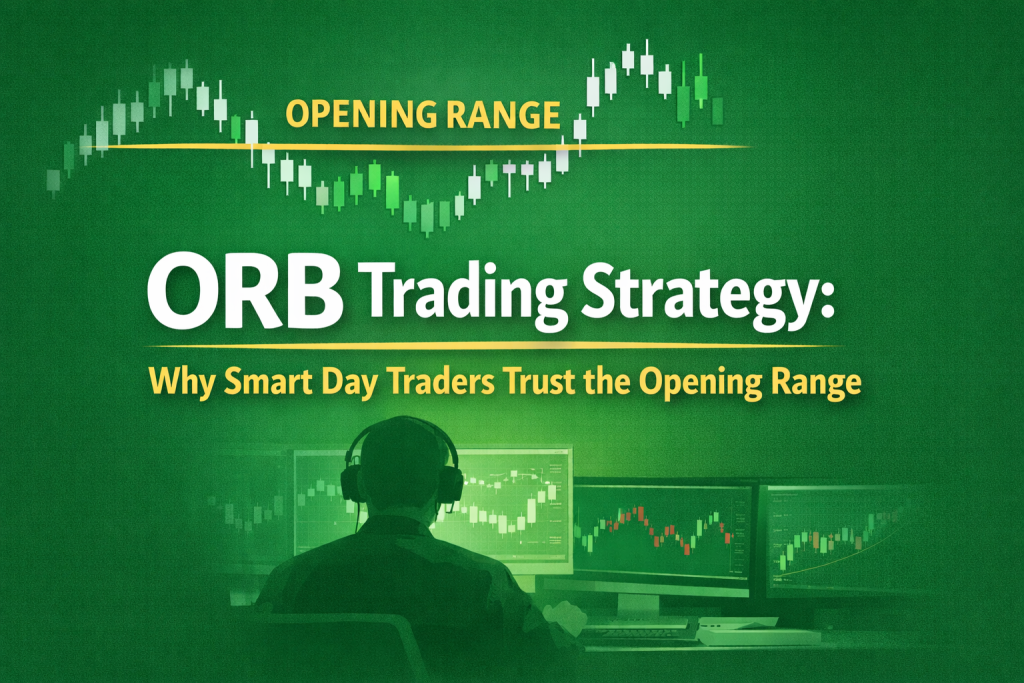
The Opening Range Breakout strategy is based on the high and low formed during the first 5, 15 or 30 minutes of a trading session. This range represents a temporary balance between buyers and sellers.
Once that balance breaks, price often moves in the direction of the breakout.
- A break above the opening range suggests bullish intent
- A break below the opening range suggests bearish intent
Instead of predicting direction, ORB traders react to price behavior, which makes this strategy objective and rule-based.
ORB is widely used in:
- Forex markets
- Futures markets
- Stocks and indices
The biggest strength of the ORB trading strategy is clarity. You always know:
- Where your entry is
- Where your stop loss goes
- Where the trade idea is invalid
How the ORB Strategy Works (Step by Step)
Here is how most experienced traders apply ORB in real market conditions:
1. Mark the Opening Range
Identify the high and low of the first 5, 15 or 30 minutes after the session opens.
2. Wait for a Clean Breakout
Price should close clearly above or below the range. Simply touching the level is not enough.
3. Enter the Trade
- Buy after a confirmed bullish breakout
- Sell after a confirmed bearish breakout
4. Set the Stop Loss
Stops are usually placed:
- Inside the opening range, or
- On the opposite side of the range
5. Define the Target
Targets can be based on:
- Fixed risk-to-reward (1:2 or 1:3)
- Session highs/lows
- Nearby structure or liquidity zones
In my experience, ORB works best when price consolidates first, then expands. Markets often move sideways before breaking out, which is a healthy sign—not a weakness. If you want to understand why markets consolidate before expanding, you can read our detailed guide on market consolidation and breakouts.
15-Minute ORB Strategy Explained
The 15-minute ORB strategy is fast and aggressive. It suits traders who prefer early entries and strong momentum.
Advantages
- Quick trade opportunities
- Early participation in trends
- High reward potential
Disadvantages
- Higher chance of false breakouts
- Requires strict execution and discipline
This version performs best during high-volume sessions such as London and New York. Many traders improve accuracy by waiting for market structure confirmation or divergence before entering. For example, using bullish and bearish divergence as a filter helps avoid weak ORB signals.
30-Minute ORB Strategy: A More Reliable Approach
The 30-minute ORB strategy gives the market more time to reveal real intent. Noise is reduced, and breakouts tend to be more meaningful.
Professional traders often prefer this version because:
- Fake moves are filtered out
- Risk levels are clearer
- Trades require less emotional pressure
If you are new to ORB trading, the 30-minute approach is strongly recommended.
Best Time Frame for ORB Trading
There is no single perfect time frame, but a commonly used structure is:
- 15-minute or 30-minute chart to define the opening range
- 5-minute chart for entries and confirmations
ORB trades perform significantly better when aligned with the higher time-frame trend. When breakouts occur near key chart patterns like double tops or double bottoms, probabilities improve.
Does the ORB Strategy Work in the Tokyo Session?
Yes, the ORB strategy can work in the Tokyo session, but expectations must be realistic.
Tokyo session characteristics:
- Lower volatility
- Slower price movement
- More ranging behavior
ORB works best in Tokyo when:
- Trading JPY pairs
- There is a clearly defined Asian range
- No major news events are scheduled
False breakouts are common, so smaller targets and conservative risk are essential.
Does ORB Work in the Asia Session?
The Asia session includes Tokyo, Sydney, and early Asian hours. ORB can work, but traders must understand that:
- Price often consolidates
- Breakouts may lack follow-through
Asia session ORB performs better when:
- Trading gold or JPY pairs
- The higher time-frame trend is strong
- Breakouts occur near important levels
Patience matters more than frequency during this session.
ORB Futures Strategy Explained
The ORB futures strategy is often more reliable than forex ORB because futures markets have:
- Clear session opens
- Strong institutional participation
- Defined volatility windows
Popular ORB futures markets include:
- S&P 500 (ES)
- Nasdaq (NQ)
- Crude Oil (CL)
From my experience, futures respect opening ranges very cleanly, especially during New York opens.
ORB Strategy Success Rate: The Reality
For a deeper theoretical explanation of opening range behavior, you can also refer to the classic definition of the Opening Range Breakout on trusted trading education resources such as Investopedia.
The ORB strategy success rate depends more on the trader than the strategy.
Typical win rates range between 45% and 60%, but profitability comes from:
- Strong risk management
- Avoiding low-volume sessions
- Trading only clean, confirmed breakouts
Even a 45% win rate can be profitable with proper risk-to-reward control.
Common ORB Trading Mistakes
Most traders fail with ORB because they:
- Trade every breakout without confirmation
- Ignore higher time-frame direction
- Overtrade during low volatility
Candlestick behavior can help avoid weak trades. For example, bearish rejection signals like the Hanging Man candlestick pattern near the opening range high often warn of false bullish breakouts. For example, bearish rejection signals near the opening range high often warn of false bullish breakouts.
Is the ORB Strategy Good for Beginners?
Yes, ORB is beginner-friendly because:
- Rules are simple and objective
- Risk is clearly defined
- Decisions are based on price, not indicators
Beginners should:
- Practice on demo accounts
- Focus on one session only
- Avoid adding unnecessary indicators
Simple price action works best with ORB.
Final Thoughts: Does the ORB Strategy Really Work?
So, does the ORB trading strategy work?
Yes—when traded under the right conditions.
ORB works best when:
- The market has real volume
- You trade the correct session
- Risk management is respected
ORB is not a shortcut to profits. It is a structured framework that helps traders align with early market intent. When combined with discipline and patience, it becomes one of the most reliable tools in a day trader’s plan.
Trade smart, not often—and ORB can serve you for years.
Risk Disclaimer: Trading involves risk. Past performance does not guarantee future results. Always trade with proper risk management.
Frequently Asked Questions
What is the ORB trading strategy?
ORB (Opening Range Breakout) is a strategy where traders use the high and low of the first 15–30 minutes of a session to identify breakout opportunities.
Does ORB strategy work for the Tokyo session?
Yes, but it works best on JPY pairs and during higher liquidity periods, as low volatility can lead to false breakouts.
What is the best time frame for ORB strategy?
Traders often use 15-minute or 30-minute charts for marking the opening range and a smaller 5-minute chart for entry confirmation.
Can ORB strategy be used for futures trading?
Yes, futures markets often show cleaner opening ranges, making ORB highly effective for intraday setups.
What is the success rate of ORB strategy?
Typical success rates range between 45–60%, with profitability depending on risk management and session selection.
Should beginners use the ORB strategy?
Yes, beginners can use ORB as it has clear rules and defined risk, but it’s recommended to start on demo accounts first.