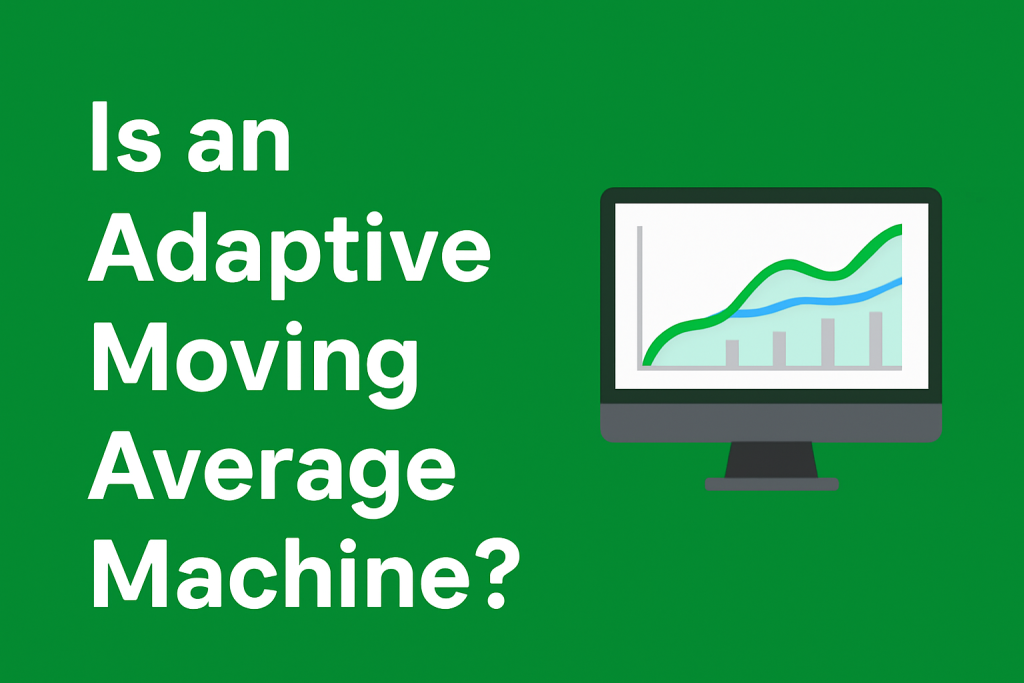
Is an Adaptive Moving Average Machine the Key to Smarter Trading?
In today’s fast-moving financial markets, traders look for tools to make better decisions. Traditional moving averages, like the Simple Moving Average (SMA) or Exponential Moving Average (EMA), are often used to spot trends, but they can be slow to react. An adaptive moving average machine can help with this. But what is it, and how does it help traders follow trends more accurately?
If you want to know how professional traders avoid confusing price changes and spot important trends, learning how an adaptive moving average (AMA) works is important. In this article, we will explain AMA, its benefits, simple trading strategies, and why it can be better than traditional moving averages.
What is an Adaptive Moving Average?
An adaptive moving average (AMA) is a type of moving average that adjusts itself automatically to market volatility. Unlike SMA or EMA, which apply the same weight to price data regardless of market conditions, AMA responds dynamically to price fluctuations.
Developed by Perry J. Kaufman in 1998, AMA is sometimes referred to as the Kaufman Adaptive Moving Average (KAMA). Its main goal is to reduce the lag associated with traditional moving averages while still smoothing out market noise. This means that in calm markets, AMA behaves like a slow-moving average to avoid false signals, and in volatile markets, it becomes more responsive to sudden price changes.
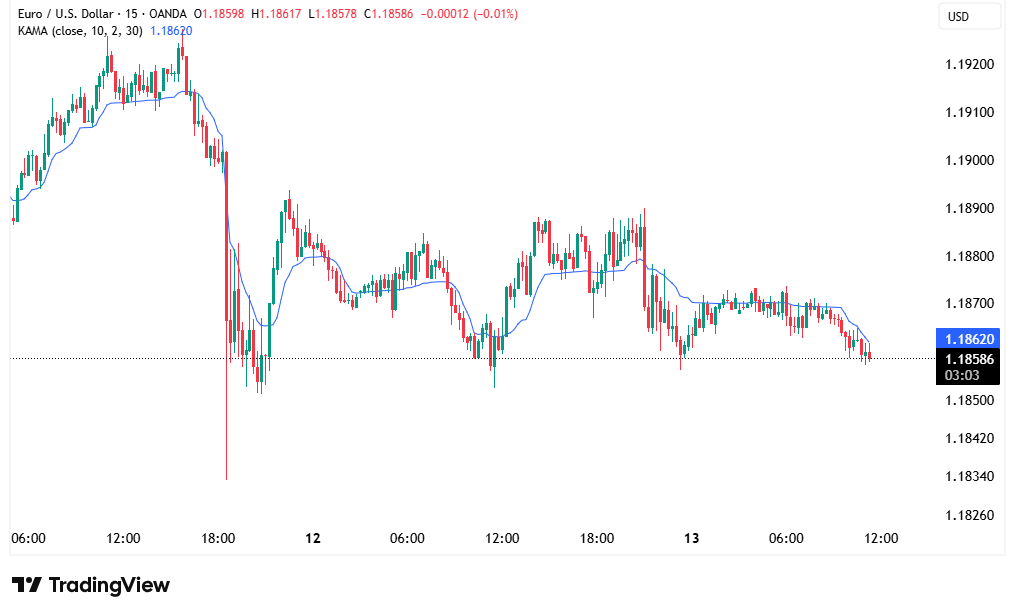
AMA vs SMA and EMA: Which Moving Average Works Best?
- SMA (Simple Moving Average): This is the average price over a set period. It’s easy to calculate and commonly used by traders. However, it reacts slowly to sudden price changes, which can cause delays in spotting trends.
- EMA (Exponential Moving Average): EMA gives more weight to recent prices, making it faster than SMA. While it reacts quicker to price changes, it can still lag during very volatile market conditions.
- AMA (Adaptive Moving Average): Developed by Perry J. Kaufman, AMA adjusts its sensitivity based on how efficiently the market is moving. This makes it both smooth during sideways markets and responsive during trends.
Because of its adaptive nature, AMA helps traders reduce false signals while staying closer to real market trends. It’s particularly useful for those who want to make informed decisions without constantly adjusting settings.
How an Adaptive Moving Average Machine Works
An adaptive moving average machine is software or a trading tool that uses AMA formulas to give real-time signals to traders. These machines calculate AMA using two key elements: the efficiency ratio and the smoothing constant. This allows the machine to adapt quickly to changing market conditions, helping traders make better decisions.
Algorithm Behind AMA
- Efficiency Ratio (ER): Shows how clearly the price is moving in one direction over a set period. A higher ER means a strong trend, while a lower ER means the market is moving sideways or is choppy.
- Smoothing Constant (SC): Decides how fast the moving average reacts to price changes. SC is calculated from the ER, so the AMA becomes more sensitive in trends and less sensitive in sideways markets.
AMA Formula:
AMA = Previous AMA + SC × (Current Price – Previous AMA)
This formula ensures that AMA adjusts its speed based on how the market is moving, making it responsive without giving false signals.
Key Features of an AMA Machine
- Automatic Adjustment: Changes quickly when market conditions change.
- Reduced False Signals: Smooths out noise in sideways markets.
- Versatility: Works well in both trending and choppy markets.
By automating these calculations, an adaptive moving average machine lets traders focus on strategy instead of constantly adjusting settings. It helps them react faster to market trends and avoid unnecessary mistakes.
Benefits of Using an Adaptive Moving Average
Using an adaptive moving average (AMA) machine can make trading easier and more efficient. Here are the main benefits:
- Smarter Trend Detection
AMA adjusts to price changes, helping traders spot trends earlier than SMA or EMA. Detecting trends early means traders can enter positions at the right time and make more informed decisions. - Faster Reaction in Volatile Markets
AMA reacts quickly when prices change suddenly. Unlike traditional moving averages, it doesn’t lag behind, so traders can respond faster to market moves. - Supports Algorithmic Trading
Many automated trading systems use AMA for real-time analysis. By adapting to price movements automatically, AMA helps bots make better trading decisions without human intervention. - Works Across Different Markets
AMA is useful in stocks, forex, commodities, and cryptocurrencies. This versatility makes it a reliable tool for traders in any market. - Better Risk Management
By smoothing out confusing price movements, AMA reduces false entry or exit signals. This helps traders avoid unnecessary losses and manage risk more effectively. Using the correct position size is also important, and a lot size calculator can help traders manage risk more effectively.
AMA vs Other Moving Averages
| Feature | SMA | EMA | AMA |
| Responsiveness | Low | Medium | High |
| Lag | High | Medium | Low |
| Adaptive to volatility | No | No | Yes |
While SMA is simple and easy for beginners, it often lags too much. EMA reacts faster but can still produce false signals in sideways markets. AMA’s adaptability offers a balanced approach, making it a superior choice for many traders.
How to Use an Adaptive Moving Average in Trading
Trading Strategies with AMA
- Trend Following
Traders use AMA to confirm market trends. If prices are above the AMA line, it indicates an uptrend; below it suggests a downtrend.
- Clear, but could explain the importance: e.g., helps traders know when to buy or sell.
- Entry and Exit Signals
AMA can signal entry points when the price crosses above or below it, while exit points can be determined using additional indicators like RSI or MACD. To apply AMA signals correctly, traders should also understand how to read stock market charts and graphs.
- Technical terms (RSI, MACD) are fine, but could briefly explain their purpose.
- Combination Strategies
AMA works well when combined with other technical indicators. For example, using AMA with Bollinger Bands can improve the accuracy of buy and sell signals.
- Clear, but can add why combining indicators improves decisions.
Practical Tips for Traders
- Use appropriate periods: Shorter periods make AMA more sensitive, longer periods reduce noise.
- Avoid over-reliance: AMA should be used as part of a broader strategy, not alone.
- Monitor market context: AMA performs best in trending markets but may require adjustments in sideways conditions.
- Clear, but could be simplified and connected to practical impact for beginners.
Common Mistakes When Using AMA
Even though AMA is a powerful tool, traders sometimes make mistakes that reduce its effectiveness. Here are the most common errors:
1. Relying Only on AMA
Using AMA alone without looking at other market factors can lead to bad trading decisions. Always combine AMA with other indicators or analysis to get a clearer picture of the market.
2. Ignoring Market Conditions
AMA adjusts to price changes, but in very fast or volatile markets, it might give false signals. Traders should check market trends and other signals before acting.
3. Using Wrong Settings
Setting the wrong period or efficiency ratio can make AMA less accurate. Short periods make it too sensitive, while long periods make it slow. Choose settings that match your trading style and the market you are trading in.
AMA in Algorithmic and Automated Trading
An adaptive moving average (AMA) machine is often used in algorithmic trading. Trading bots use AMA to make automated decisions based on real-time price data. This helps traders act faster and more efficiently.
Benefits of Using AMA in Automated Trading
- Faster Trades
AMA allows trading bots to execute trades much faster than a human can. This is important when prices change quickly. - Reduce Emotional Decisions
By relying on AMA signals, traders can avoid making impulsive decisions based on fear or excitement. Automated systems follow the rules consistently. - Adapt to Market Changes
AMA adjusts to changing market conditions automatically. This allows algorithms to modify strategies without manual intervention.
Algorithmic trading with AMA is popular in stocks, forex, and cryptocurrency markets. It helps traders stay efficient and responsive without having to monitor the market constantly.
Final Thoughts
An adaptive moving average machine is a useful tool for modern traders. It combines the smoothness of traditional moving averages with the ability to adjust to changing market conditions. This helps traders spot trends earlier and react faster to price changes.
However, AMA is not a guaranteed way to make profits. It works best when used correctly and combined with other trading tools and analysis.
If you want to trade smarter, learning how to use AMA in your strategy can be helpful. Always remember that trading involves risk, and no indicator, including AMA, can guarantee success.
Disclaimer: This article is for educational and informational purposes only. An Adaptive Moving Average Machine (AMA) is a technical tool and does not guarantee profits. Trading involves significant risk, and readers should use AMA alongside proper research, risk management strategies, and other indicators. Always consult with a licensed financial advisor before making trading decisions.
Frequently Asked Questions
What is an adaptive moving average machine?
An adaptive moving average machine is a trading tool or software that uses an adaptive moving average (AMA) to analyze price movements. It automatically adjusts to market conditions, helping traders identify trends more accurately than traditional moving averages.
How is AMA different from SMA and EMA?
Unlike SMA and EMA, which use fixed calculations, AMA changes its sensitivity based on market behavior. This allows AMA to react faster in trending markets and remain smooth during sideways markets.
Can beginners use an adaptive moving average?
Yes, beginners can use AMA. However, it’s recommended to first understand basic trading concepts and combine AMA with other simple indicators for better results.
Does an adaptive moving average guarantee profits?
No, AMA does not guarantee profits. It is only a technical analysis tool. Trading always involves risk, and no indicator can ensure successful trades every time.
In which markets can AMA be used?
AMA can be used in many markets, including stocks, forex, commodities, and cryptocurrency markets. It works best in markets that show clear price movements.
Is AMA suitable for automated or algorithmic trading?
Yes, AMA is commonly used in algorithmic and automated trading systems. Its ability to adjust to changing market conditions makes it useful for trading bots and automated strategies.
Should AMA be used alone or with other indicators?
AMA works best when used with other indicators such as RSI, MACD, or support and resistance levels. Using multiple tools helps reduce false signals and improves decision-making.
What is the biggest mistake traders make when using AMA?
The most common mistake is relying only on AMA without considering market context or other indicators. Proper risk management and confirmation are always important.
Is AMA good for short-term or long-term trading?
AMA can be used for both short-term and long-term trading. The effectiveness depends on the settings and how well it is combined with a suitable trading strategy.
Why is AMA considered a smart trading tool?
AMA is considered smart because it adapts to market changes automatically. This helps traders react faster to trends while avoiding unnecessary noise in the market.